


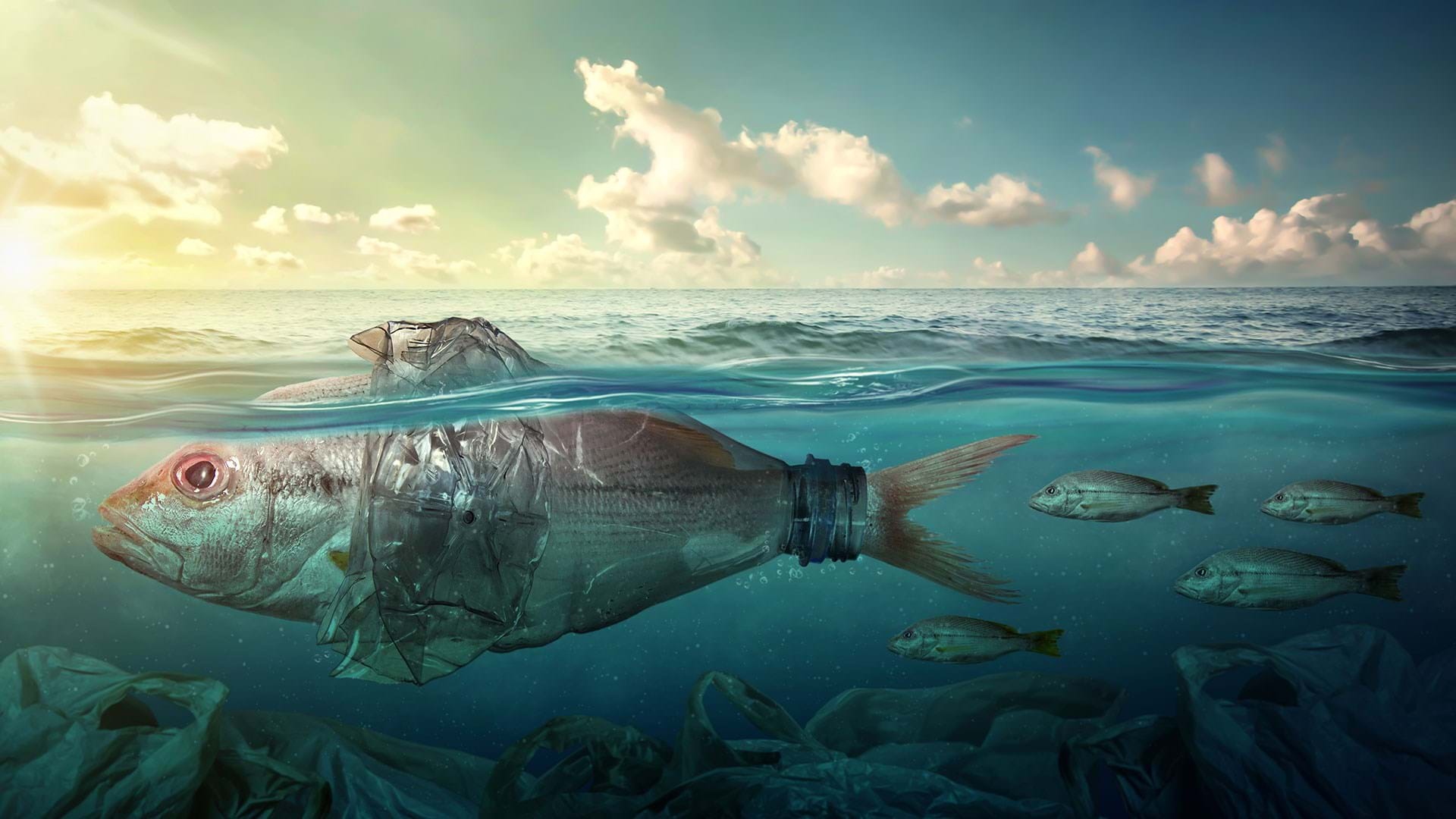
Ultimate Roundup of Marine Pollution Facts: The Causes and Impact on both Marine and Human Life.
The ocean is one of the most unexplored parts of our planet, with a magnitude of undiscovered species and mysteries. It turns out from the studies conducted over the last few decades, this magnificent environment is under serious threat from human intervention, with plastics set to outnumber fish by 2050.
Marine life, as we know it, is suffering irreparable damage from the chemical pollution of the waters and the millions of tons of mismanaged waste dumped in the oceans each year. The result is a planetary crisis with over 100 million marine animal’s lives get lost every year, and the decay of the ocean's ecosystem. For every person on the planet, there are 21,000 pieces of plastic polluting our oceans.
Almost 1,000 species of marine animals get impacted by ocean pollution, and we now have over 500 locations recorded as dead zones where marine life cannot exist. How did this happen, what is causing the most damage, find out everything below in the marine pollution statistics roundup.

Shocking Ocean Pollution Statistics:
In 2024, 220 million tons of plastic waste will be generated, averaging 28kg per person worldwide.
69.5 million tons will be mismanaged and end up in the natural environment.
66% of the global population lives in areas where plastic waste exceeds local management capacity.
UK households throw away an estimated 90 billion pieces of plastic packaging annually.
In 2025, it is estimated that 75 to 199 million tons of plastic waste will be in our oceans, with a further 33 billion pounds of plastic entering the marine environment every year.
There could also be around 10,000 times more plastic sitting on the sea bed.
It's estimated that roughly 14 million tons of plastic annually enter the ocean.
For every person on the planet, there are 21,000 pieces of plastic in the ocean.
100 million marine animals die each year from plastic waste alone.
100,000 marine animals die from getting entangled in plastic yearly – this is just the creatures we find!
1 in 3 marine mammal species get found entangled in litter, 12-14,000 tons of plastic are ingested by North Pacific fish yearly.
By 2050, the pollution of fish will be outnumbered by our dumped plastic.
The largest trash site on the planet is the Great Pacific Garbage Patch, twice the surface area of Texas, it outnumbers sea life there 6 to 1.
China is ranked #1 for mismanaged waste and plastics. However, the US is in the top 20 with a more significant waste per person contribution.
300 Million tons of plastic is created yearly, this weighs the same as the entire human population, and 50% is single-use only.
There are 5.25 trillion pieces of plastic waste estimated to be in our oceans. 269,000 tons float, 4 billion microfibers per km² dwell below the surface.
Of which, 236,000 are ingestible microplastics that marine creatures mistake for food.
Plastics take 500-1000 years to degrade; currently 79% is sent to landfills or the ocean, while only 9% is recycled, and 12% gets incinerated.
500 marine locations are now recorded as dead zones globally, currently the size of the United Kingdom’s surface (245,000 km²)
300 Million tons of plastic gets created yearly, and this weighs the same as the entire human population, and 50% is single-use only.
An estimated 8 Million tons of plastic enters our oceans every year.
There are 5.25 trillion pieces of plastic waste estimated to be in our oceans. 269,000 tons float, 4 billion microfibers per km² dwell below the surface.
70% of our debris sinks into the ocean's ecosystem, 15% floats, and 15% lands on our beaches.
In the past 10 years, we’ve made more plastic than the last century. By 2050, the pollution of fish will be outnumbered by our dumped plastics.
In various studies, plastics made up 60-90% of the marine pollution found.
Ocean crusaders estimate there to be 46,000 plastic pieces in our waters per mile (squared).
As plastic decomposes over 100’s of years, it breaks into micro pieces and can spread all over the planet.
Other than incinerated plastics, the entire volume we ever created is still on our planet in some form.
Plastic bags are illegal in Kenya. People found using, selling, or manufacturing them risk 4 years of incarceration and a $40,000 fine.
How long does plastic last in the ocean? Well, plastic was only invented in 1907, and mass production started between 1940s and 1950s. Unfortunately for our oceans, every bit of plastic that was ever created still exists in some form as it takes 100’s of years to decompose, and even when it does, it merely turns into micro pieces then microfibers.
In terms of the effects of plastic pollution on marine life - These plastics floating in our ocean or sinking to the bottom and turning into microfibers are particularly hazardous to fish, mammals, and sea life in general. They absorb toxins and chemicals from other forms of water pollution to become even more dangerous to the animals ingesting them.
Sources: PlasticOceans, EarthDay, SAS, EcoWatch, GlobalCitizen
80% of pollution in our oceans comes from land-based sources.
Most developing countries dispose of 90% water, and 70% industrial waste gets discharged into our oceans without treatment.
We produce 100,000 chemicals commercially – all of which threaten the ocean through transport accidents and leaking into the soil or atmosphere to reach the sea.
1950-1998 over 100 nuclear blast tests occurred in our oceans.
50% of the world’s ship cargo is considered dangerous to the environment; 90% of the planets international trade is transported by ship.
6,000 offshore gas and oil installations provide 30% of the world's energy supply.
The gas and oil industry releases greenhouse gases and causes thousands of spills annually.
Oil spills are vastly dangerous to the oceans, but only 12% come from actual spills – the rest leaks in from drains and rivers.
3,000 different marine species are transported around the planet in 12 Billion tons of ballast waters, causing significant problems with invasive species entering marine ecosystems.
In the Baltic sea alone, there are over 100 alien species impacting marine life.
80% of global marine pollution comes from agriculture runoff, untreated sewage, discharge of nutrients and pesticides.
Coastal areas get significantly impacted by fertilizer runoff from lawns and farms. These nutrients cause algal blooms to flourish and dissolve the water's oxygen levels.
These harmful algal-based blooms have tripled since 1984, closing beaches and killing fish.
Annually, the Mississippi River flows 1.5 million tons of nitrogen pollution into the Gulf of Mexico.
The U.S Navy uses a high-intensity sonar for training – this has been linked to whale strandings.
As you can see from the causes of marine pollution statistics above, there are many chemicals, gases, oil spills, and even nuclear tests that have damaged marine life as we know it. Through cargo shipping we’ve also managed to disturb nature’s ecosystem by moving invasive species of marine life into habitats they shouldn’t be in.
The items we throw away, chemicals we produce, including CO2 emissions, will make their way to the sea even if the source is 100’s of miles away from the coastline. When looking at marine pollution and in particular marine plastic pollution coming from us, there were three leading causes:
Marine pollution causes 1: Discarding materials that can be recycled.
Materials that can be recycled but get put into regular bins often will end up in landfills, and some countries don’t even have recycling programs as an option. When these items end up in landfills, the toxins can seep into the soils and make their way to the ocean through rivers; alternatively, many lightweight plastics can blow away in transit or from the landfill into drainage and rivers.
Marine pollution causes 2: Everyday littering
Similar to our wastes journey through not recycling, when we discard plastics and other potentially toxic materials through littering, our drainage and rivers are what carry it to the sea. Rainwater or wind can move the waste we leave behind into these drainage routes that go to the ocean.
On a larger scale than our footprint, there is also a problem with illegal dumping of waste.
Marine pollution causes 3: Products and chemicals that go into our drains.
There are products we use on a day to day basis that many people improperly discard down the toilet, such as sanitary products, cotton buds, and wet wipes. A lot of people also don’t realise that when we wash our clothes, the majority are made from materials that are classed as plastics – these release microfibers as well, and yet again follow our own drainage to the sea.
Sources: WorldOceanNetwork, Mission Blue, WWF, NRDC, UNESCO
The largest trash site on the planet is the Great Pacific Garbage Patch, located in the North Pacific Subtropical Gyre.
The Great Pacific Garbage Patch is reported to cover an estimated surface area of 1.6 million square kilometers.
In just seven years, plastic fragments in the Great Pacific Garbage Patch have risen from 2.9kg per sq km to 14.2kg per sq km.
The marine garbage patch is twice the surface area of Texas it outnumbers sea life there 6 to 1.
The North Pacific Subtropical Gyre is 20 million square kilometres, created by four currents (North Pacific, Kuroshio, North Equatorial, and the California current)
80% of the Great Pacific Garbage Patch is made up of debris from Asia and North America.
20% of the Great Pacific Garbage Patch is offshore debris oil rigs, pacific cargo ships, and boaters dumping trash into the water.
705,000 tons of this is fishing nets, making up the majority of the waste. However all sorts of electricals and toys are found lost from cargo ships.
Millions of pieces of plastic get contained in the 5 ocean gyres, and marine wildlife is directly poisoned on this while feeding in their habitat.
46% of the plastic items we create floats, it can take years of currents before ending up in the ocean's gyres.
The Great Pacific Garbage Patch is a floating island of debris, accumulated in the North Pacific Ocean by an extensive system of currents called gyres. It is built up from two other waste patches, the western garbage patch near Japan and the eastern garbage patch near America's west coast near California and Hawaii.
The North Pacific Subtropical Convergence Zone links the east and western garbage patches, acting as a highway for waste to move from one to the other. Because of this, a small item of debris dropped near California can travel across to Japan, then eventually get sucked up by these swirling garbage patch vortexes.
The great pacific garbage patch size is quote shocking - These patches of trash are said to be twice the size of Texas and float on the surface but do drop several meters into the ocean in places, which makes the correct size challenging to measure. The world’s largest garbage site is mainly made up of microplastics creating a vast cloud, with newer items of debris that haven’t broken down as much floating around like chunks in a soup. The great pacific garbage patch effects on marine life are extremely significant.
Sources: Ecowatch, National Geographic, Safe Food Advocacy,
Whales are the largest consumers of plastic waste - it's estimated that blue whales consume 10 million pieces of plastic per day
This equates to roughly 4 metric tons of plastic during the feeding season.
100 million marine animals die each year from plastic waste alone.
100,000 marine animals die from getting entangled in plastic yearly – this is just the creatures we find!
1 in 3 marine mammal species get found entangled in litter, 12-14,000 tons of plastic are ingested by North Pacific fish yearly.
Our marine pollution and debris are hazardous for creatures in the gyres.
Loggerhead sea turtles hunt jellyfish, which unfortunately look remarkably like plastic bags.
The majority of marine life cannot differentiate their food from plastic garbage we’ve dumped.
These animals starve to death, clogging their stomachs with plastic so they can’t eat real food.
For example, Albatrosses and other birds mistake plastics for fish eggs, and they sadly feed them to their chicks, which in turn perish from organ failure or starvation.
Marine plastic pollution is found in 100% of turtles, 59% of whales, and 36% of seals in recent studies.
The air isn’t safe either,more than 90% of all seabirds are found to have plastic pieces in their stomachs.
Mammals like seals drown in the 705,000 tons of discarded fishing nets – this horrifying phenomenon has been dubbed ‘ghost fishing’.
500 marine locations are now recorded as dead zones globally, currently the size of the United Kingdom’s surface (245,000 km²)
Our coral reefs house some 25% of all marine life known to man. When it comes in contact with marine plastic, the probability of it dying goes from 4%-89%.
The majority of fish we consume as humans (trout, perch, cisco, etc) would have ingested plastic and microfibers.
Over 3 billion people depend on the ocean for livelihoods, but pollution has led to declining fish stocks and job losses in affected communities.
It was believed that due to the vast size of the ocean, we could dump waste and it would not have any impact, however the increase of volumes coupled with the way the gyres and current take move them, this is not the case. How many marine animals die each year from plastic… 100 million is the current estimated figure, and this includes fish, mammals and sea birds.
When looking at animals affected by water pollution, globally, it’s estimated that 50% of sea turtles are impacted by plastics, ingesting it and dying through their digestive systems getting clogged. For many turtles, jellyfish are a crucial part of their diets, and it just so happened that plastic bags look a lot like them.
There are 705,000 tons of discarded fishing nets in the ocean, too, and this is another critical threat to many sea mammals like seals, dolphins, whales, and even smaller animals such as fish and sea lions. Getting tangled in these can lead to injury and often death.
As far as sea birds are concerned, the figures are shocking. Of all species studied, 98% of Albatross are believed to have ingested plastics at some point. This is due to them mistaking the microplastics for fish eggs, passing them to their young as well as consuming them as adults.
Fish are absorbing toxins from the ocean and are taking in debris through their gills. Whales take in vast amounts of plastics and waste mistaking it for food, examinations of stranding’s have shown increases in this issue.
Where we can see waste debris is a huge problem, marine animals are harmed by toxic chemicals like oil and other pollutants are entering the ocean through spills and drainage. This vastly alters the ecosystem and suffocates any marine life coming into contact.
However, these estimates are likely to be an underestimate of the true impact. Many marine animal deaths are not recorded or observed, making it challenging to determine the exact number of deaths from ocean pollution sources. The estimates are based on available data and research.
Sources: PlasticOceans, National Geographic, UNESCO, EarthDay, SAS
70 to 80% of plastic in the oceans comes from land-based sources.
Plastics take 500-1000 years to degrade; currently, 79% is sent to landfills or the ocean.
Only 9% is recycled, and 12% gets incinerated.
Styrofoam cups take 50 years to biodegrade, Aluminum cans take 200 years, Nappies cups take 450 years, Plastic bottles take 450 years, and Fishing lines take 600 years.
Popular items found: Cigarette filters (32%), Food packaging (9%), Bottle caps (8%), Tableware (6%), Bottles (plastic) (6%), Plastic carrier bags (5%).
Cigarette filters are the most common item collected from beach pickups, more than 60M in 30 years – that’s just the ones we found.
500 billion plastic bags get used every year - on average, the working life of these bags is 15 minutes.
Annually we discard 1 Trillion plastic bags worldwide; joining them together would circle the globe 4,200 times.
Annually we use 500 Billion plastic bottles – This means there are 66 times as many bottles as there are humans on the planet.
14% of our garbage is from these bottles, under half are collected for recycling, but only 7% become a new bottle.
60% of the materials that form our cloths are plastic forms (Nylon, acrylic, polyester, etc). In a typical laundry wash, 700,000 microplastic fibres come off into the water.
Annually, the U.S. disposes of 27.4 Billion nappies, many of which end up in our landfills and ocean.
Annually, the U.S. discards 2 Billion razors and 1 Billion plastic toothbrushes.
In the UK and US alone, 500 Million plastic straws get thrown away annually.
As of 2024, the Ocean CleanUp has removed ten million kilograms of litter from oceans and rivers around the world.
There are five types of marine pollution:
Pollutant 1: Ocean Acidification
The oceans that cover our planet act as a carbon dioxide sponge; when it’s in our atmosphere it gets absorbed by our oceans. The positive effect of this is that our oceans are lowering our global warming by reducing CO2 concentration. The problem is the levels of CO2 are too high and the volume getting absorbed by the sea is impacting pH levels. This is extremely harmful as it changes the whole ecosystem, vulnerable habitats like coral fall victim to this, which are home to 25% of all marine life.
Pollutant 2: Plastic Debris
There are 5.25 trillion pieces of plastic estimated to be in our oceans, and this plastic waste is a violent threat to all marine life. Discarded fishing nets get all sorts of creatures tangled in them, fish, turtles, and seabirds eat microplastics mistaken for food. Every year the ingestion of these products leads to a long-winded and horrible death to millions of animals. Furthermore, many of these animals consuming plastics are actually in our food chain, so our waste comes back to poison us too.
Pollutant 3: Eutrophication
Eutrophication is a process when the water body has an increase in chemical nutrient concentration. This can spike the growth of plants or, more often than not, where pollution is concerned, cause mass decay, reducing oxygen levels in the water. This results in ‘dead zones’ where the oxygen levels are so low that marine life cannot survive.
Pollutant 4: Noise
Human activities can generate a lot of noise within the oceans from sources such as seismic surveys, oil exploration, sonar, and mass cargo shipping. Many forms of marine life depend on their sense of hearing for survival; for example the confusion from the Navy’s sonar has been linked to whale stranding.
Pollutant 5: Toxins
Toxins such as DDT, heavy metals, pesticides, phenols, PCBs, etc. are what are called persistent toxins – What are the effects of marine pollution with toxins? they do not disintegrate in our oceans. These toxins enter the bodies of all forms of the marine life food chain and ultimately end up causing disease and death. Of course, we are within this food chain as the apex predator, meaning we are also consuming these biomagnified toxins from our food.
Sources: EcoWatch, BBC, NBC, PlasticOceans1, PlasticOceans2, VOX
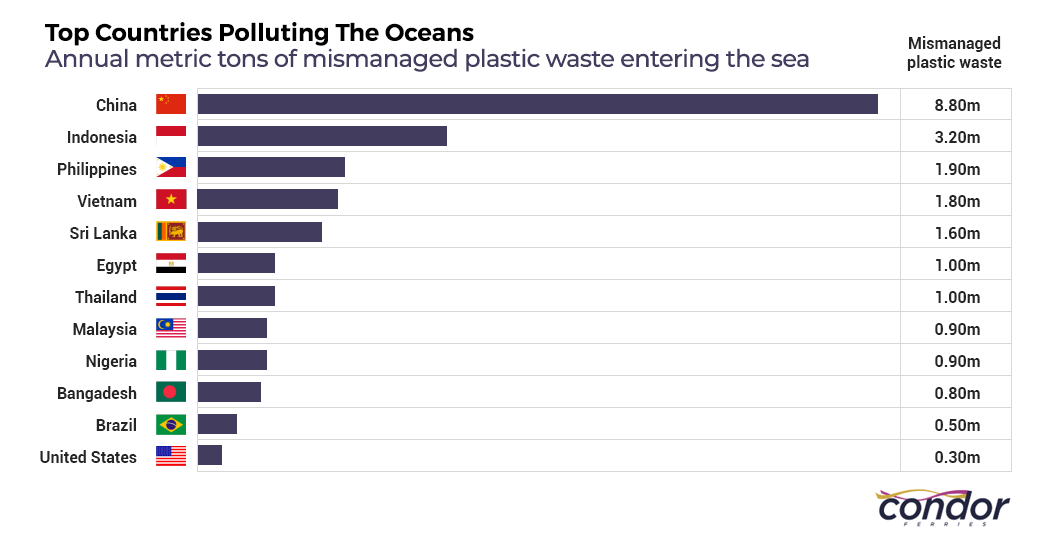
As of 2025, the Philippines pollutes the ocean the most, producing 360,000 metric tons of annual plastic waste.
While China and the US are the world's largest plastic producers, the Philippines contributes the most to ocean plastic pollution.
China is ranked #1 for mismanaged waste and plastics; however, the US is in the top 20 with a more significant waste per person contribution.
50% of the world’s plastic gets manufactured in Asia, in China holds 18% of the world’s population, and 29% of this plastic gets created there.
A study by GreenMatch.co.uk in 2025 found that the Philippines produces 360,000 metric tons of annual plastic waste, the highest amount among all countries. This is followed by India, Malaysia, and China.
Although China and the US produce the most plastic, the Philippines contributes the most to ocean plastic pollution. This is largely due to its many small islands and a large population living near the coast.
Other ocean pollution by country statistics from the same report show 3.2M tons of mismanaged waste and 1.29M ending up in the oceans from Indonesia, a country with 264 million population. In comparison, the United States has 327 million people living there with 0.11 million metric tons of waste entering the sea. Shockingly, at the time of the report in 2010, both China and Indonesia accounted for over a third of the planet's plastic waste, according to the Wall Street Journal.
Sources: BBC, National Geographic, Statista, GreenMatch
90% of the global ocean debris comes from 10 rivers alone.
8 in Asia: Amur, Indus, Pearl, Yangtze, Yellow, Ganges, Hai He, Mekong;
2 in Africa: Niger and the Nile.
Top 10 rivers
1,469,481 tons - Chang Jiang (Yangtze River)
164,332 tons - Indus
124,249 tons - Huang He (Yellow River)
91,858 tons - Hai He
84,792 tons - Nile
72,845 tons - Meghna, Brahmaputra, Ganges
52,958 tons - Zhujiang (Pearl River)
38,267 tons - Amur
35,196 tons - Niger
33,431 tons - Mekong
As we mentioned earlier, there was an estimated 8 million tons of plastic ending up in our oceans every year, and one Dr. Christian Schmidt and his team set out to find how it gets there as part of a critical task of finding out the causes of ocean pollution through their entry points.
In the last decade, researches spent a great deal of time analysing the waste in the water around some 57 large rivers that flow into our oceans. From studying the river and surrounding landscape, they were able to estimate that 10 rivers are the hosts of 90% of the plastics getting dumped into the oceans.
The estimates were made by Schmidt and his team calculating waste quantities per cubic meter, then pairing them against the other 57 in the study… these 10 had the highest counts of plastic:
Eight of the rivers sending this volume of plastic are from Asia: The Amur, Indus, Pearl, Yangtze, Yellow, Ganges, Hai He, Mekong, and in Africa. The other two are - the river Niger and the Nile.
Sources: UN Environment
Coastal water contamination is responsible for 250 million clinical cases of human diseases annually.
Only 1 in 20 adults bathing are at risk from becoming ill after a single bathing visit in waters considered ‘acceptable’ by microbial standards.
At the current rate, by the end of the century, our waters will be 150% more acidic than now.
80% of sewage discharged into the Mediterranean Sea is untreated.
Contaminated shellfish is the cause of 50,000-100,000 deaths annually due to damaged immune systems and cancer.
People that primarily eat seafood as their diets like indigenous people of the Canadian Arctic and Greenland are found to be contaminated by POPs (Persistent Organic Pollutants).
100% of the population of East Greenland has blood contamination.
The direct medical and health costs of polluted waters are $16 Billion globally each year.
Economic losses due to non-indigenous species getting introduced into the ocean are in the 100’s of million dollars.
70% of the oxygen we and other land animals is directly from the sea.
It's estimated that liabilities related to plastic pollution are going to cost the industry $100 billion as people sue for damages.
Around $20 billion of this is forecast to be in the United States.
It’s no illusion that to survive, man needs a harmonious relationship with the planet's oceans, in fact, over 70% of the oxygen we breathe is directly created by marine plants. What we do on land impacts what goes on offshore, for example, 30% of our CO2 emissions are absorbed by our oceans, and our waste disposal greatly influences the toxicity of its ecosystem and wildlife.
When looking at ocean pollution effects on humans, the plastics, metals, and chemicals found in polluted water contaminate our very own seafood and water supplies. This can cause a variety of severe problems for us, such as nervous system damage, kidney issues, and reproductive or hormonal issues.
How ocean pollution affects humans: The bacteria in the water reacts with the metals we dispose of like mercury, transforming them into their most toxic forms. This, in turn, is absorbed by a variety of marine plant life – which is a typical food of the fish we consume, so in turn, this toxic waste boomerangs back up the food chain to us after we dispose of it. Exposure to this poisonous methylmercury has been linked heavily to causing heart disease, Alzheimer’s and Parkinson’s disease.
Even ingesting the polluted waters, we’ve created in some beaches can cause rashes, diarrhoea and stomach aches.
Sources: WorldOceanNetwork, WWF, NRDC, RTS,
INFORMATION
MORE
CONDOR BREAKS

- Condor Ferries
- New Jetty Offices
- White Rock
- St Peter Port
- Guernsey
- GY1 2LL
- +44 3456 091 024
FOLLOW US


