


On this page you’ll find all the information you need to make travelling with your car as easy and enjoyable as possible, between the UK, Guernsey, Jersey and St Malo.
Choose your car from one of the vehicles below when booking, to ensure your check-in process goes smoothly!
60
minutes
CHECK-IN ADVICE
WITH A VEHICLE
Check-in closes 60 minutes prior to your departure

Medium Car
& Roof Load
Up to 3.1m High
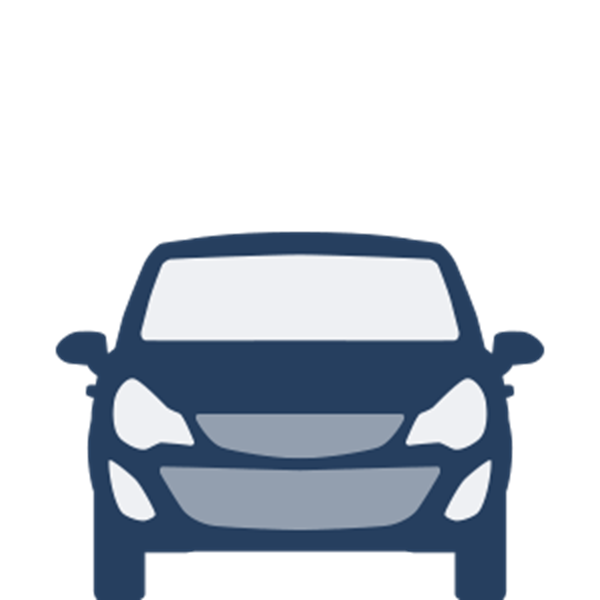
Standard Car
Up to 1.85m High
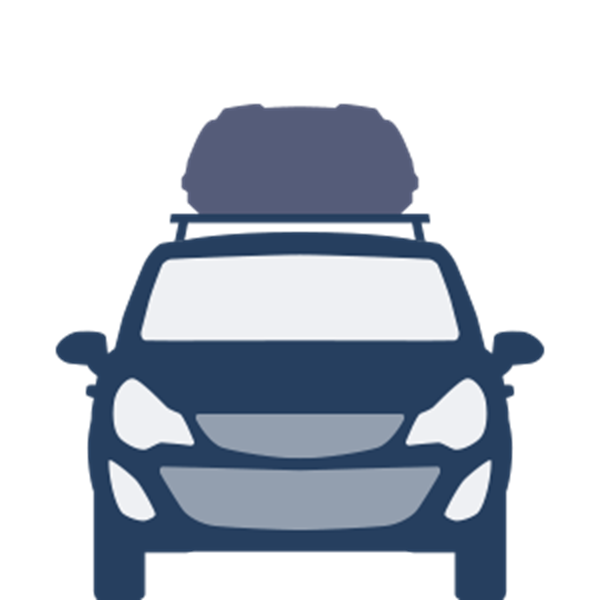
Standard Car & Roof Load
Up to 2.2m High
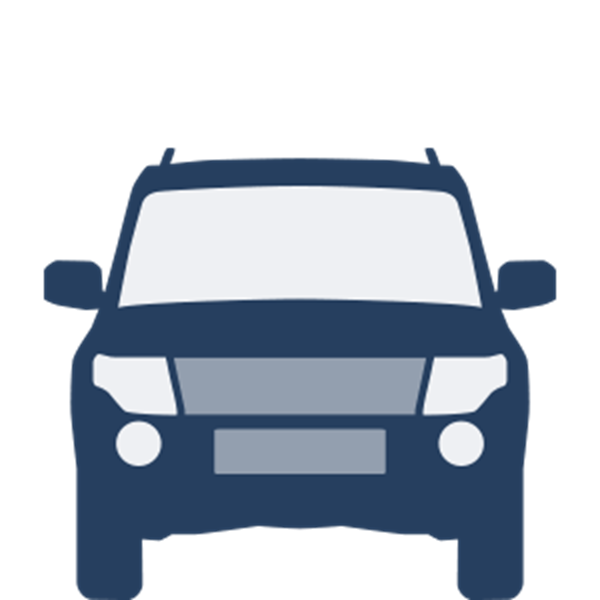
Medium Car
Up to 2.2m High
Making sure you book the right vehicle size
Vehicles up to a height of 3.1 metres can be booked online. Should your vehicle height be greater than this please contact us. It’s important that you’ve booked the correct vehicle height for your journey. Please note, if your vehicle height is different to your booking, an increase in fare and an amendment fee may apply. On some occasions, passengers with an incorrectly booked vehicle height may not be able to board. If you are unsure of your vehicle height, please speak with a member of our Contact Centre team on 0345 609 1026, who will be happy to assist you.
Checking-in with a car
Check in opens 2 hours before you are due to sail and closes promptly. Check-in will close 1 hour before your scheduled departure time. Please leave plenty of time to arrive at the port for check-in. We recommend you plan your journey carefully in advance, and also keep an eye on our sailing updates too, for any changes in departure times.
When you arrive at the Port, just follow the signs to Condor Ferries Car Check-in, making sure you have your booking reference number at the ready as well as your photo ID, such as a passport or driving licence. If you’re travelling to France don’t forget to have your passports handy too.
Driving onto the Ferry
You’ll be guided onto the ship by our experienced crew, and because our ships stop at more than one port, cars have to be loaded in a specific order. So please be patient, as it’s not necessarily first come first served. Once you have driven onto the ship and into your parking space, please apply your handbrake, and switch off your car alarm.
Some of our passengers travel with pets, and it’s important not to distress them in transit. Read our guidelines on travelling with your pets for more information.
When you leave the vehicle deck make sure you have everything you need with you for the crossing, including your boarding pass, (which you’ll need if you plan to buy anything from our onboard duty free shop), and follow the signs to the main cabin.
There you can enjoy a wide variety of hot food and snacks, a drink in one of our bars, and also make massive savings on your favourite brands, in our onboard duty-free shop!
Taking an Electric Car
There are many electric vehicle charging stations on Guernsey and Jersey which are available at locations such as public car parks, visitor attractions and at some supermarkets and hotels so if you are travelling to the Channel Islands you can be confident you will be able to charge your electric vehicle easily. Prices for re charging your vehicle vary across Guernsey and Jersey, information on accessing the charging units can be found at the sites.
Maps of locations of charging stations on both islands can be found at Map of charging points for electric car drivers in UK: Zap-Map.
Additional information can be found at Sustainable Transport - States of Guernsey (gov.gg) and Charge Point Map – Jersey Electric Vehicle Charging Network (chargeyourcar.org.uk)
Important Notice
If you travel in a vehicle with different dimensions to those on your booking form, you will be liable to an excess charge at the port of departure, and may be refused travel.
INFORMATION
MORE
CONDOR BREAKS

- Condor Ferries
- New Jetty Offices
- White Rock
- St Peter Port
- Guernsey
- GY1 2LL
- +44 3456 091 024
FOLLOW US


